Alexey Bogolyubov
Alexey Petrovich Bogolyubov (Russian: Алексей Петрович Боголюбов; 16 March 1824 – 3 February 1896) was a Russian landscape and seascape painter.
Alexey Bogolyubov | |
|---|---|
| Алексей Боголюбов | |
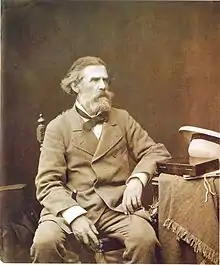 | |
| Born | March 16, 1824 |
| Died | November 7, 1896 (aged 72) |
| Education | Member Academy of Arts (1858) Professor by rank (1861) Full Member Academy of Arts (1893) |
| Alma mater | Imperial Academy of Arts (1853) |
| Known for | Painting |
| Style | landscape art marine art |
| Movement | Peredvizhniki[lower-alpha 1] |
| Awards |  |
Biography
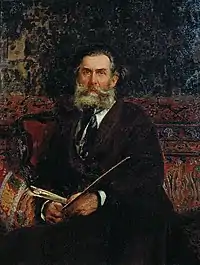
by Ilya Repin
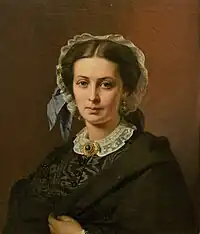
by Vasily Petrovich Vereshchagin
Bogolyubov was born in the Pomeranie village of Novgorod Gubernia. His father was retired colonel Pyotr Gavriilovich Bogolyubov. Bogolyubov's maternal grandfather was the philosopher and social critic Alexander Radishchev.[2]
In 1841, Bogolyubov graduated from military school, serving in the Imperial Russian Navy and travelling with the fleet to many countries. In 1849, he started to attend classes of the Saint Petersburg Academy of Arts, where he studied under Maxim Vorobiev. The young painter was greatly influenced by Ivan Ayvazovsky (Aivazovsky). In 1853, he finished the Academy with a major Gold medal. He retired as a navy officer and was appointed an artist to the Navy headquarters.
From 1854 to 1860, he travelled around Europe and worked prolifically. In Rome, he was acquainted with Alexander Ivanov, who convinced Bogolyubov to focus more on drawing. In Düsseldorf, Bogolyubov took classes from the painter Andreas Achenbach. In Paris, he admired the artists of the Barbizon School. French painters Camille Corot and Charles-François Daubigny were good friends and collaborators with Bogolyubov. He also painted the frescoes in the Alexander Nevsky Cathedral.
Bogolyubov returned to Russia in 1860. He exhibited his works in the Academy and received the title of professor. For some time, he taught in the Academy. In the 1860s, he traveled along the Volga. His paintings lost all traces of Romanticism, replacing that element with staunch realism of the natural. In 1871 he was elected to the Imperial Academy of Arts.
From 1870, he became close to the Wanderers art movement, participated in all their exhibitions. He became a member of their board. Much older than most of the other members of the movement, he had reservations on their social ideas. In 1873, Bogolyubov left the Academy in solidarity with his fellow Itinerants. He even tried to create an alternative Russian Academy of Arts in Rome.[2]
After 1873, Bogolyubov lived primarily in Paris, because of his heart condition. His house was like a Russian colony: frequent visitors included Ivan Turgenev, Ilya Yefimovich Repin, Vasily Polenov, Mark Antokolski, Vasili Vasilyevich Vereshchagin.[2]
In 1885, Bogolyubov opened an art museum in Saratov, the Radischev Art Museum, named after his grandfather. It was opened to the general public seven years earlier than the Tretyakov Gallery in Moscow and fifteen years earlier than the Russian Museum in Saint Petersburg.[3] The naming of the museum after the "first Russian revolutionary", Alexander Radishchev, was a direct challenge to the authorities: Bogolyubov had to endure a legal battle to get permission.
Bogolyubov died on 3 February 1896 in Paris. He left all his money and capital (around 200 thousand Russian rubles (approximately US$6 million)) to the museum and its painting school.[2] The school was opened after Bogolyubov's death and named Bogolyubov's Painting School (Боголюбовское Рисовальное Училище).[2] Among painters who attended Bogolyubov's School were such important modernist painters as Victor Borisov-Musatov, Alexei Karev and Pavel Kuznetsov.
Collections of works
- Marine art & Seascapes
 A review of the Baltic Fleet by Nicholas I at sea, from the deck of the ship, painting between 1850 and 1860.
Central Naval Museum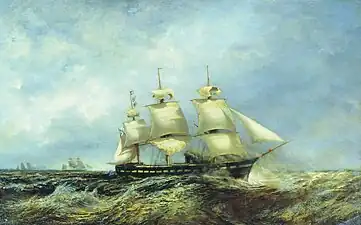 Russian squadron on its way to America in 1863
Central Naval Museum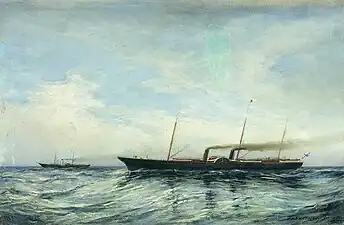 Yachts Derzhava and Zabava when opening a sea channel (1885)
Central Naval Museum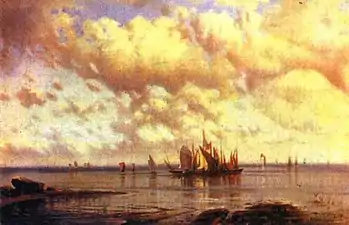 Sailing ships (1860)
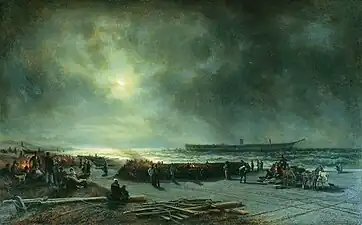 The Wreck of the Russian frigate Alexander Nevsky
Central Naval Museum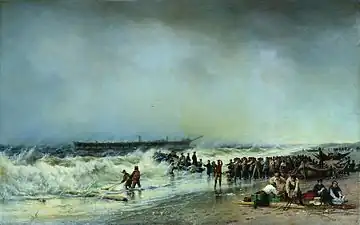 The Wreck of the Alexander Nevsky
 The Wreck of the Livadia, painting after 1878
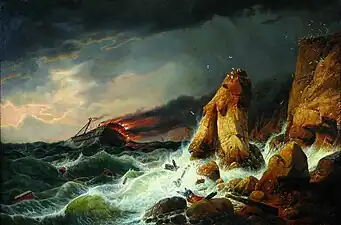 Shipwreck
 Rough sea
Warsaw National Museum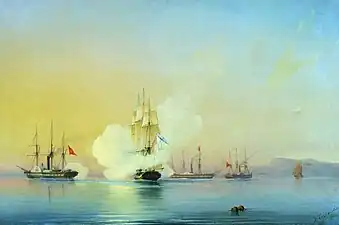 The battle of frigate Flora against Turkish steamships near Pitsunda on 11 November 1853 (1854 painting)
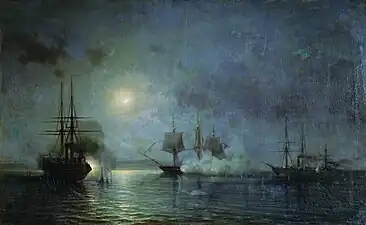 Turkish steamships attack 44 gun frigate Flora (1857)
 Attack by the boat Shutka of a Turkish steamship on the Danube on 14 May 1877
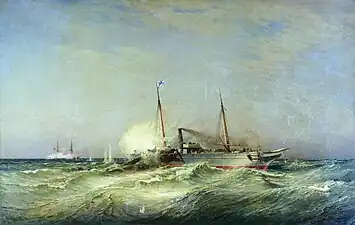
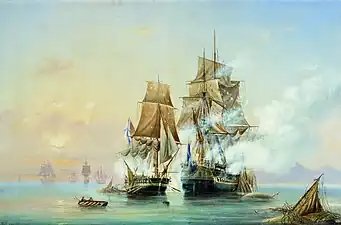
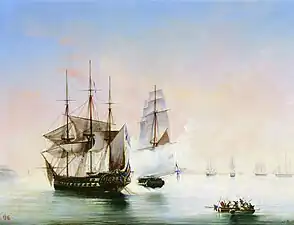 The Armed Cutter Merkuriy Capturing the Swedish Frigate Venus
Central Naval Museum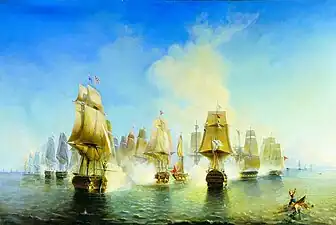 Battle of Athos in 1807
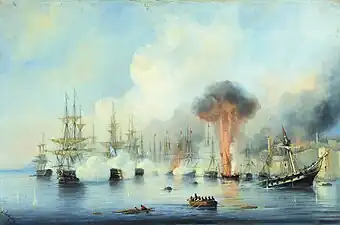 Battle of Sinop in 1853 (1860 painting)
Central Naval Museum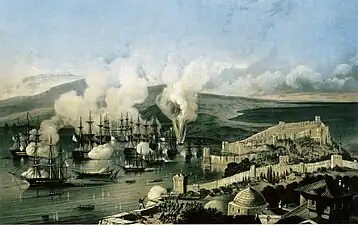 Battle of Sinop
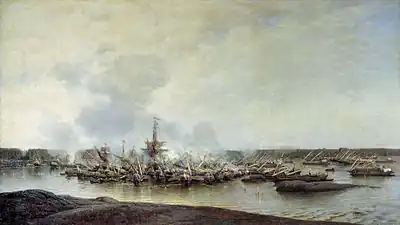 Battle of Gangut in 1714
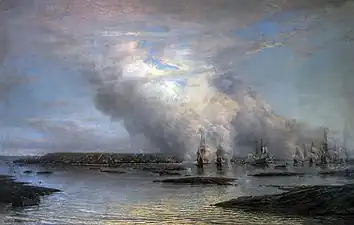 Battle of Gangut
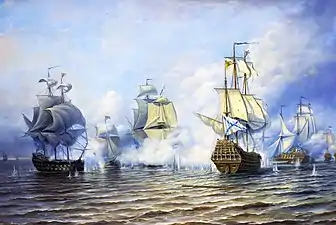 Battle of Ösel in 1719
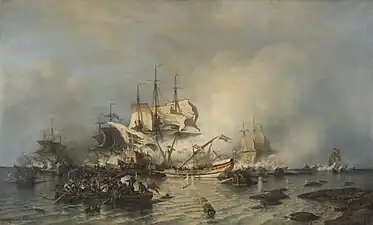
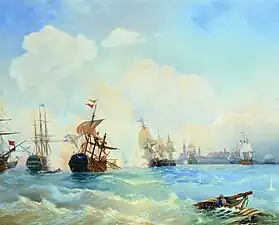 Battle of Reval in 1790 (a free copy of Aivazovsky's painting[4])
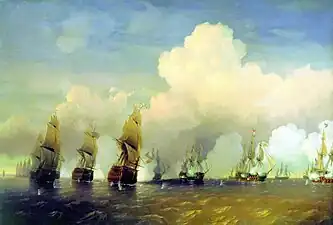 Battle of Kronstadt in 1790
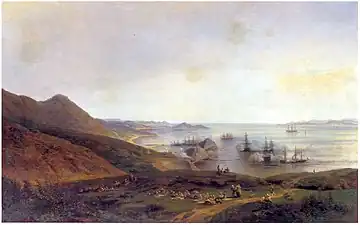 Siege of Petropavlovsk in 1854
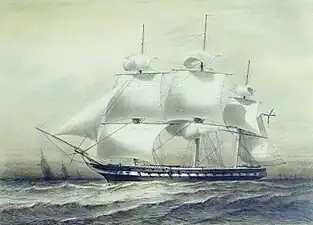 Russian frigate Pallada, 1847
Central Naval Museum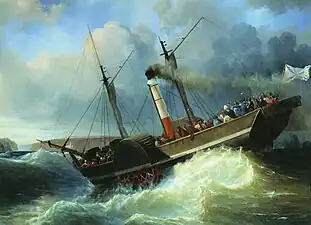 Passenger steamship Imperator Nikolay off the Black Sea coast. 1840–1850s
Central Naval Museum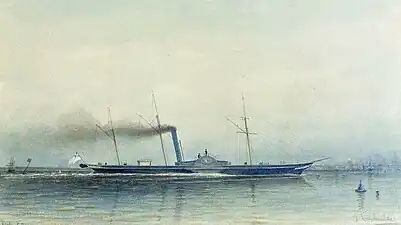 Imperial steam yacht Aleksandria of 1852
Central Naval Museum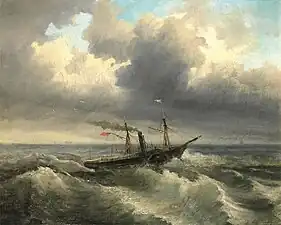 Shipping in Rough Waters
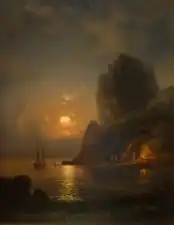 Moonlit Night at Sea, 1874
The Russian Museum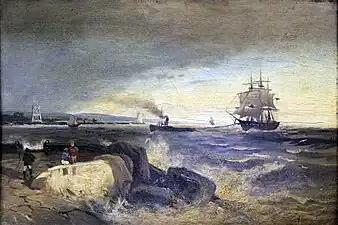 In the Bay, 1876
Yekaterinburg Museum of Fine Arts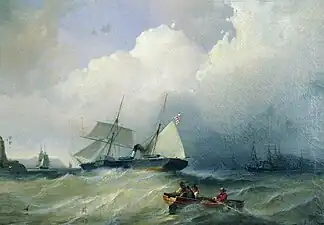 Baltic Sea (1880s)
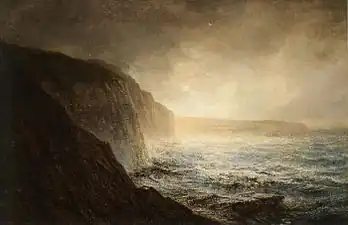 Coastal view
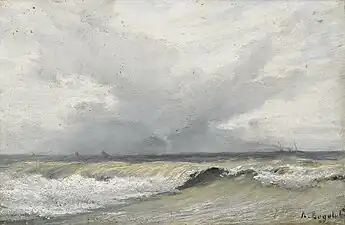 Coastal sceneru
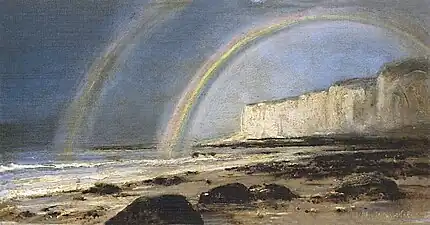 The Rainbow
Radishchev Art Museum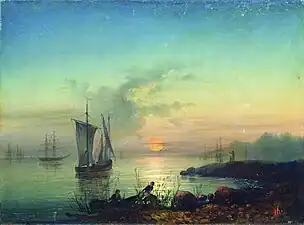 Sunset by the sea
Kherson Art Museum The theme of two lovers meeting at sunset on the seashore near a pulwar.
- Russian Empire
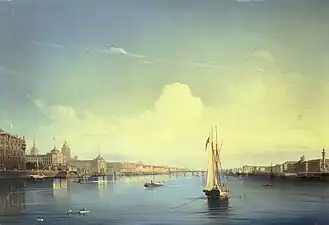 Petersburg at sunset 1850
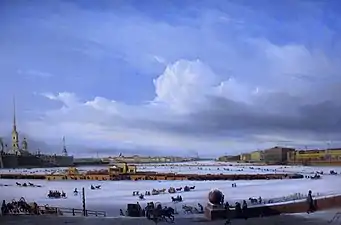
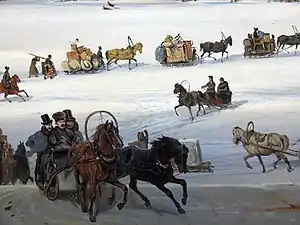 Sledging on the Neva (Detail)
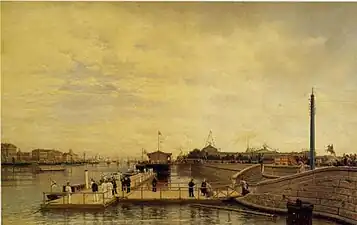 Bolshaya Neva. The painting in 1872.
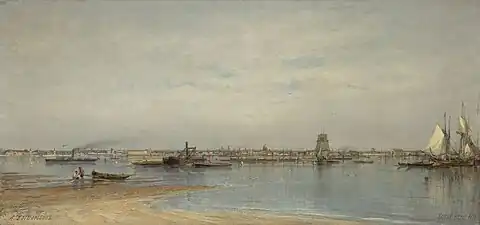 Mouth of the Neva, 1872
Tretyakov Gallery Summer Night on the Neva at the Seaside. 1875
Tretyakov Gallery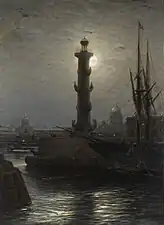 Old Saint Petersburg Stock Exchange and Rostral Columns, 1878
 View of the Smolny Convent from Bolshaya Okhta, 1851
 View of Smolny from Bolshaya Ohta, 1851
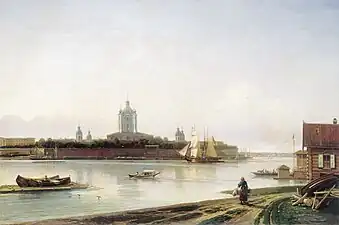 Smolny as seen from Bolshaya Okhta, 1870s
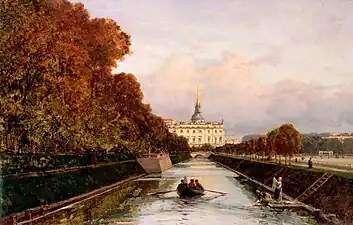 View to Saint Michael's Castle in Petersburg from the Lebyazhy Canal, 1880s
 Opening of the Saint Petersburg Sea Canal in 1886
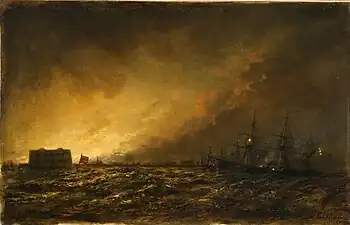 Fire in Kronstadt at Night, c. 1876
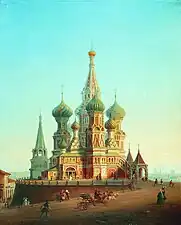
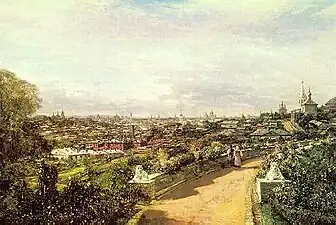 View of Moscow from the house of G. I. Hludov, 1878.
 Moscow. View of Golitsyn Hospital and Neskuchnoye in 1879.
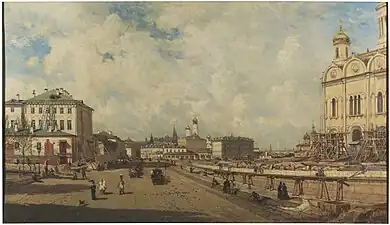
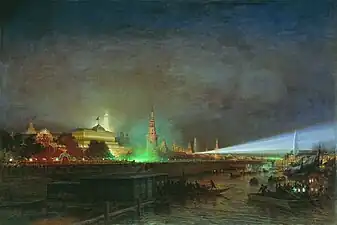 Kremlin illumination in 1883
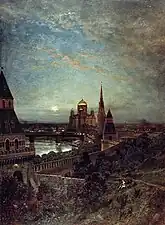 Evening in Moscow
Radishchev Art Museum View of Moscow from Babiy Gorodok, 1880s

 Port of Reval, 1853.
Art Museum of Estonia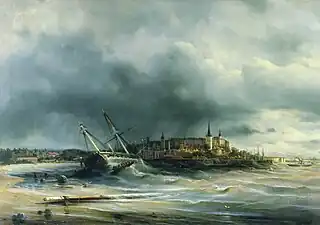 Reval, 1853
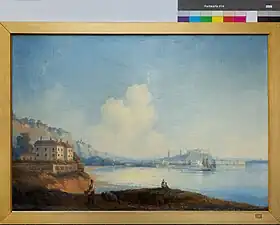 View of Reval from Suhkrumäe, 1853
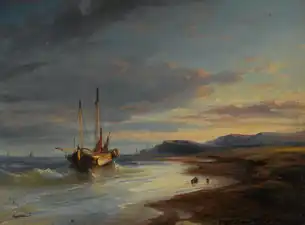 Offing (Baltics) (1854)
Tretyakov Gallery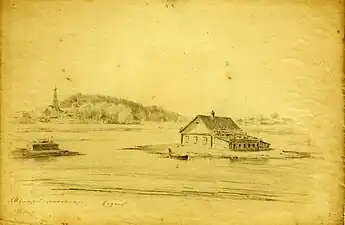 Kizichesky Monastery, 1861
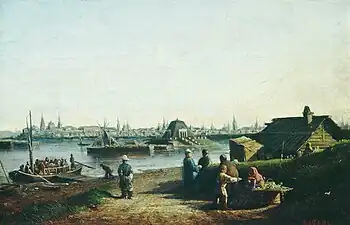 View of Kazan. 1861.
The Russian Museum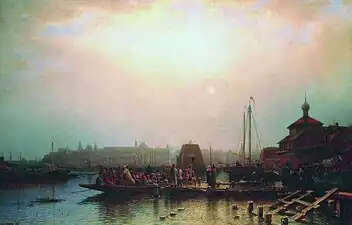 Kazan in 1862
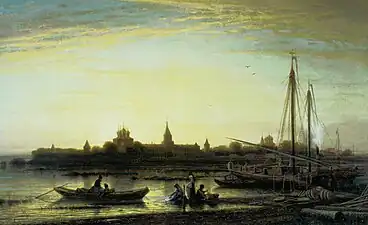 Hypatian Monastery near Kostroma, 1861
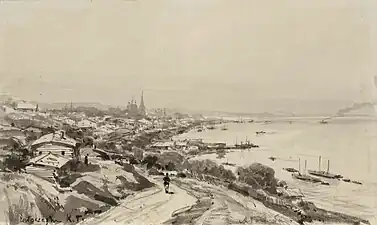
 Baku. Street at noon (1861)
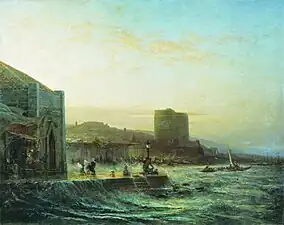 Baku Promenade and its Maiden Tower
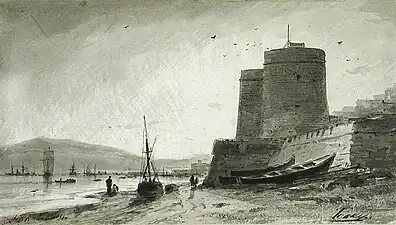 Baku, 1861
Radishchev Art Museum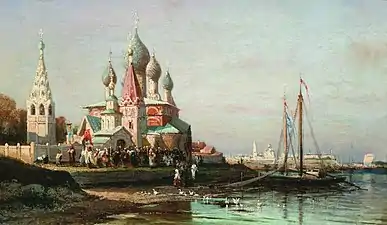 Easter procession in Yaroslavl, 1863
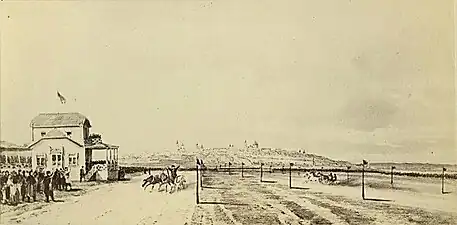
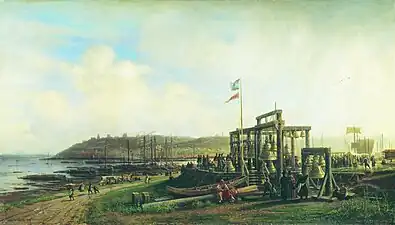 Nizhny Novgorod Fair (bell row). 1862
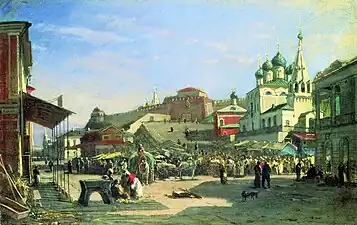 Nizhny Novgorod. Lower Bazaar (1878).
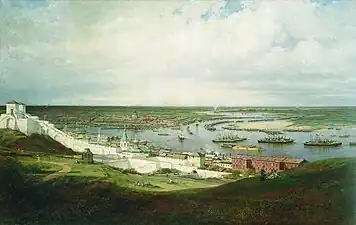 View of Nizhny Novgorod, 1878
The Russian Museum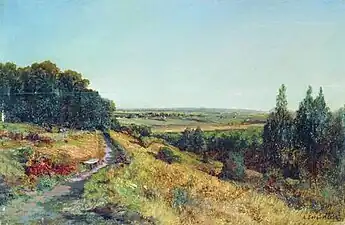 Ablyazovo homestead, 1860s
 Ablyazovo, 1887
Radishchev Art Museum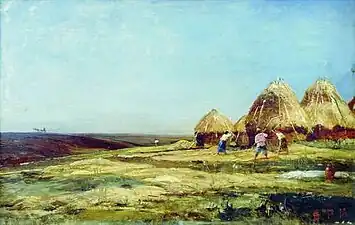 Ablyazovo. Threshing, 1887
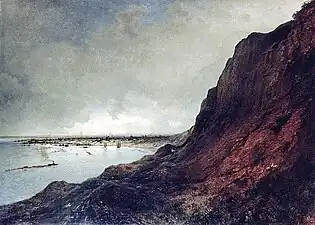 A View of Saratov, between 1887 and 1888
Radishchev Art Museum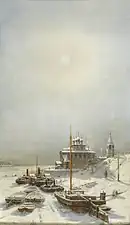 Winter in Borisoglebsk before 1902
Yekaterinburg Museum of Fine Arts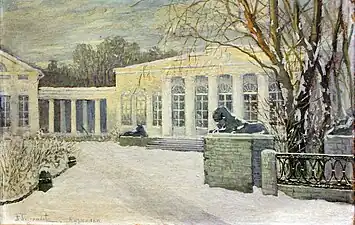 Kuzminki (estate of Prince Golitsyn), 1903
Yekaterinburg Museum of Fine Arts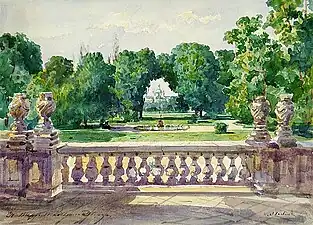 Kiev. The Palace Garden
Radishchev Art Museum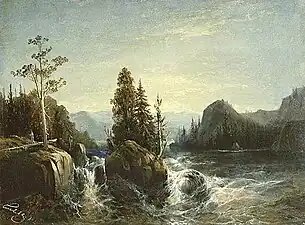 Finland
Radishchev Art Museum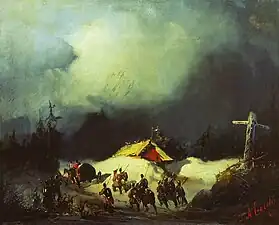 The Decembrists' exile to Finland, 1854
Radishchev Art Museum
- Italy
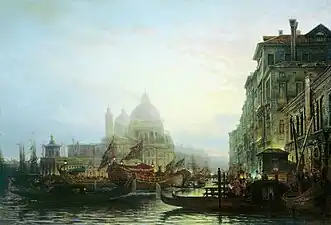 Venice at night, 1850s
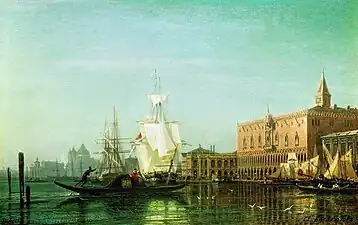 Venice
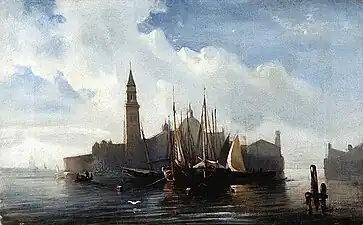 Venice, 1850
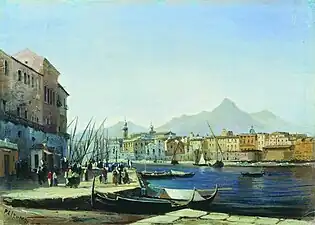 Palermo, 1850s
 A View of Naples, 1851
Radishchev Art Museum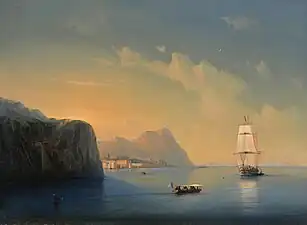 Italian coast, 1854
Novosibirsk State Art Museum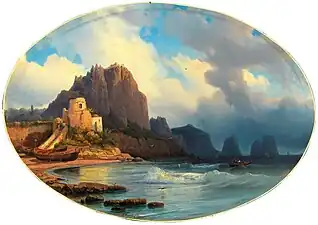 Capri, 1856
Private collection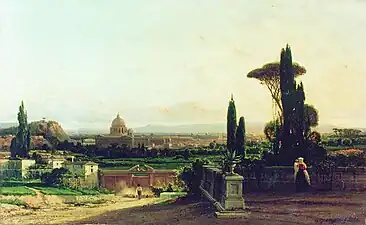 Rome, 1857
Private collection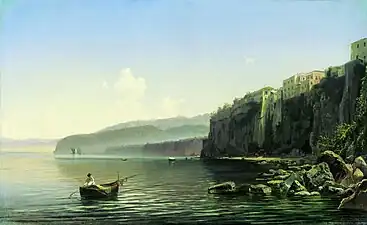 The seashore (Sorrento), 1850s
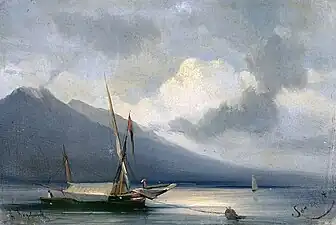 Sorrento, 1850s
Radishchev Art Museum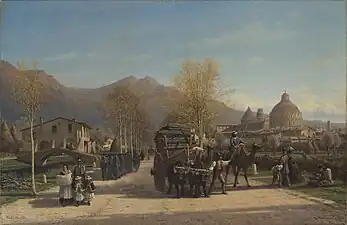
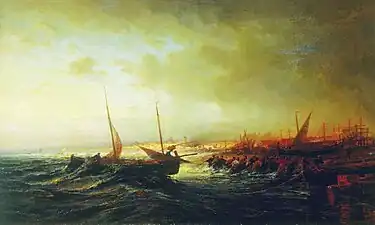 A View of Alassio, 1880
Radishchev Art Museum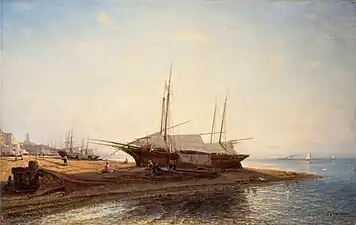 The seaside in Savona, 1880
The Russian Museum
- Ottoman Empire
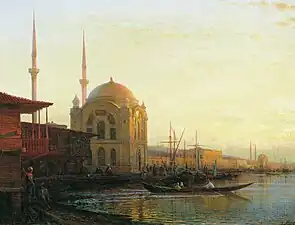 Mosque in Constantinople (1850s)
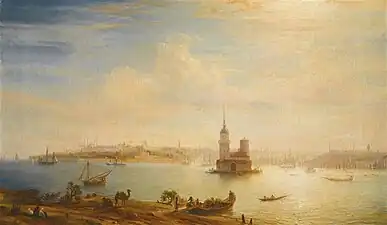 View of Constantinople, 1856
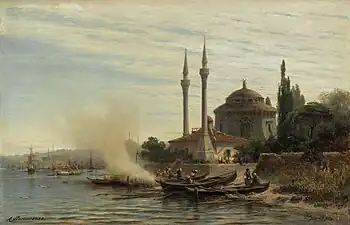 Golden Horn (Istanbul) 1864
Tretyakov Gallery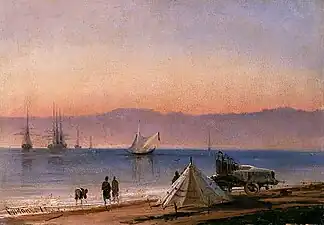 Sinop, Ottoman Turkey, 1856
- Denmark
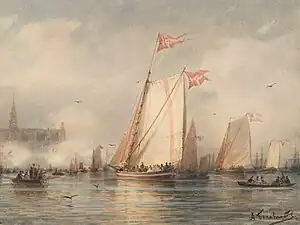 Yachts and Boats on the Water
The Russian Museum Fredensborg Palace of 1867
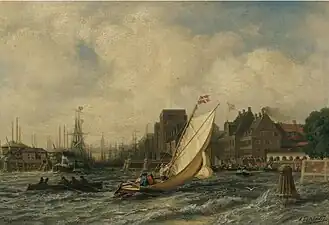 Copenhagen Harbor of 1868
- Belgium
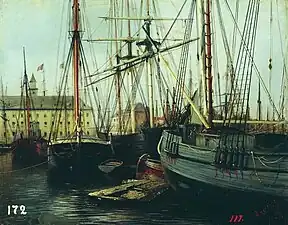 Antwerp, 1854
- France
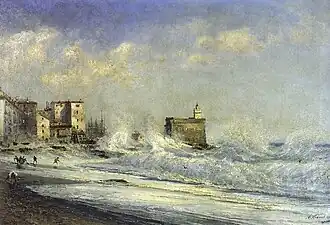 Storm in Menton, 1851
Radishchev Art Museum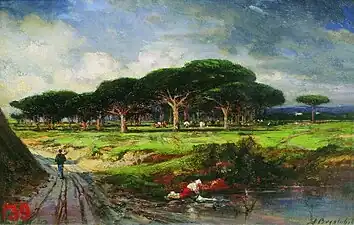 Pine Forest near Menton, 1881
Radishchev Art Museum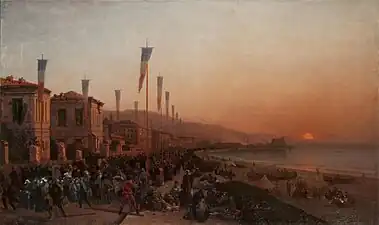 Earthquake in Menton on Carnival night, 23 February 1887 (1887)
The Russian Museum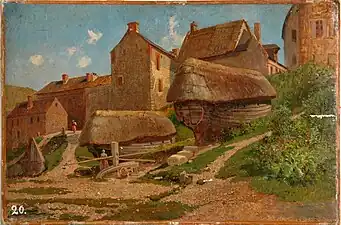 Yport. Fisherman's dwellings. 1858
 Fishing Vessel Entering Saint-Valery Harbor in Caux during a Storm c. 1859
The Russian Museum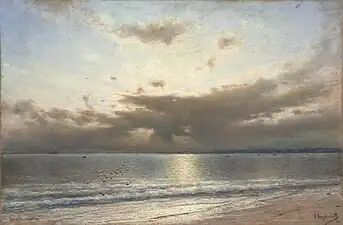 Honfleur. Sunset on the sea. 1870s
The Russian Museum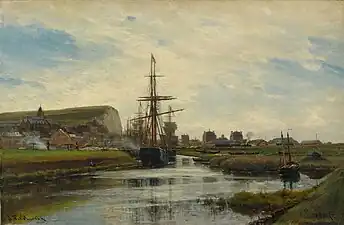
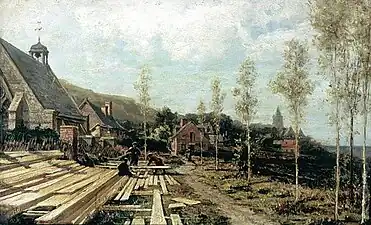 Le Tréport (1883)
Radishchev Art Museum Normandy, 1870.
Yekaterinburg Museum of Fine Arts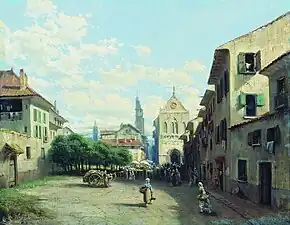 Normandy town, 1879
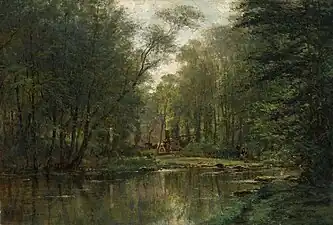 Forest in Veules-les-Roses. Normandy. (1871)
Tretyakov Gallery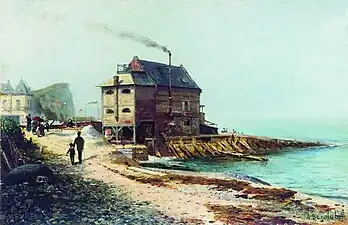 Veules-les-Roses, Normandy, French Republic, 1880
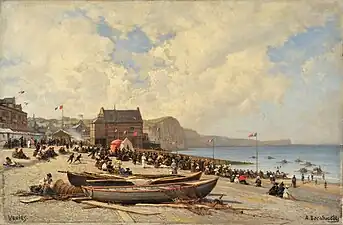 Embankment in Veules-les-Roses
The Russian Museum The Watermill in Veules-les-Roses
Radishchev Art Museum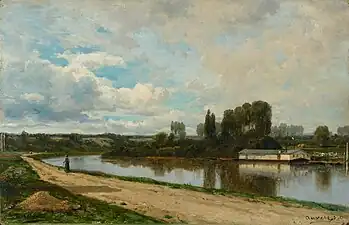 Auvers-sur-Oise, 1881
Tretyakov Gallery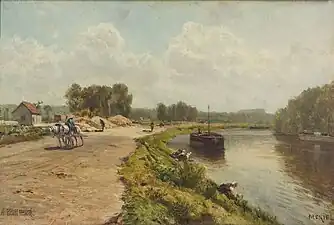
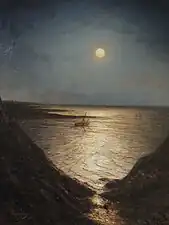 Moonlight at Pornic
 Pine Grove in Pornic, 1867
Radishchev Art Museum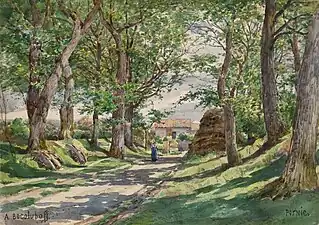 Pornic. France. 1867
Tretyakov Gallery Scenery outside Paris with woman and animals
Finnish National Gallery Scenery outside Paris
Finnish National Gallery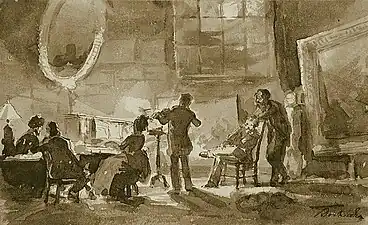 Party in Paris between 1874 and 1875
Radishchev Art Museum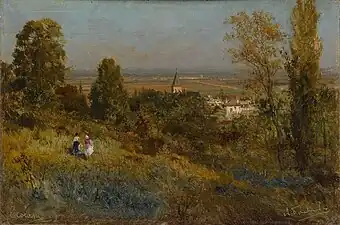 In the neighbourhood of Paris. Écouen. 1880
Tretyakov Gallery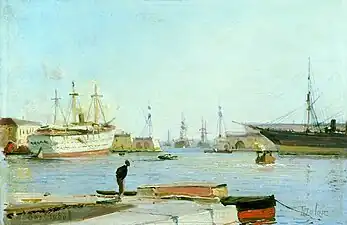 Toulon, 1880
Radishchev Art Museum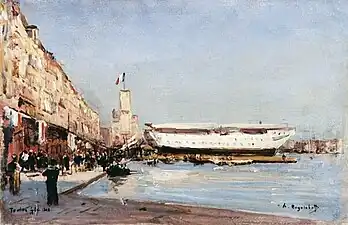 Toulon, 1893
Radishchev Art Museum The Scene on the Beach, Brittany
Private collection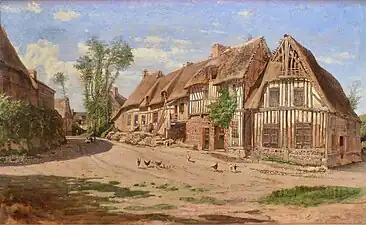 A village street in Brittany
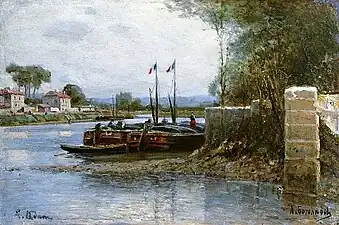 L'Isle-Adam, 1881
Radishchev Art Museum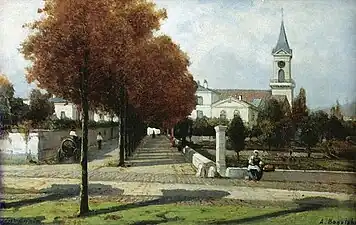 Turckheim, 1884
Radishchev Art Museum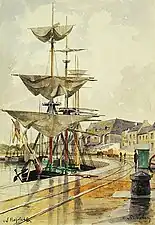 Saint-Valery
Radishchev Art Museum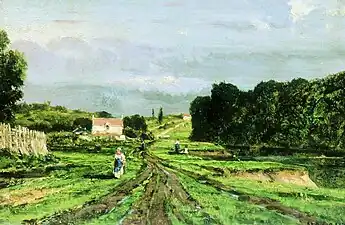 Nogent-sur-Marne. After the Rain. 1886
Radishchev Art Museum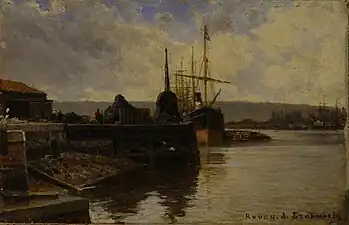 Port of Rouen, c. 1889
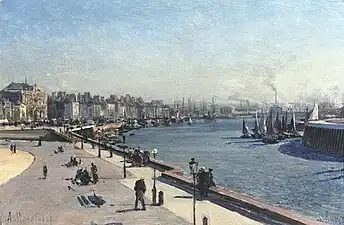 Le Havre, 1893
Radishchev Art Museum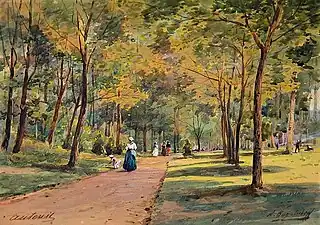 Bois de Boulogne
Radishchev Art Museum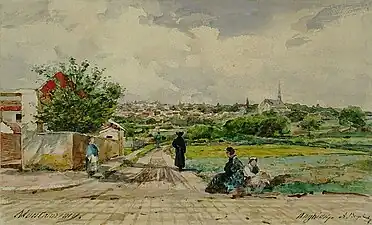 Montmorency
Radishchev Art Museum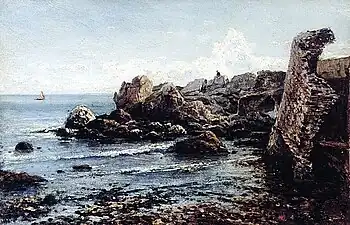 Nice
Radishchev Art Museum
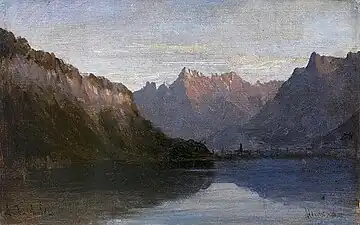 Lake Geneva (France, Switzerland)
Radishchev Art Museum
- Netherlands
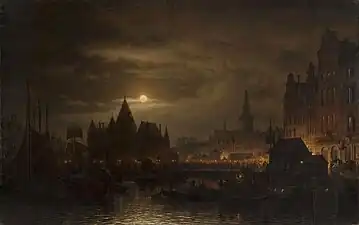 A Fair in Amsterdam c. 1859
The Russian Museum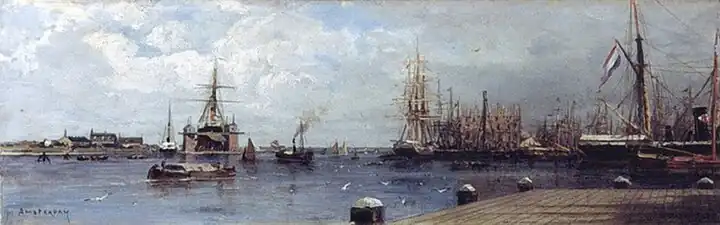 Amsterdam, 1885
Radishchev Art Museum
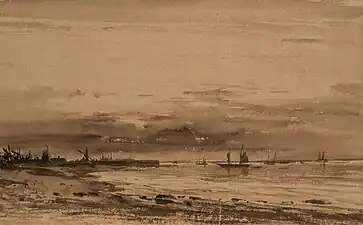
- Austria-Hungary
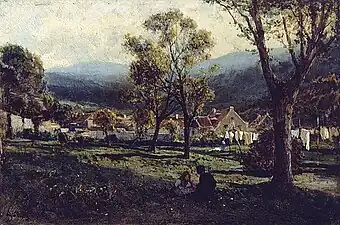
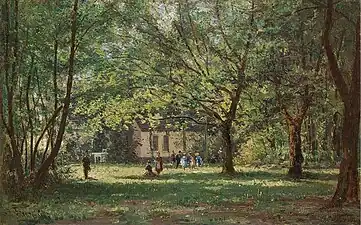
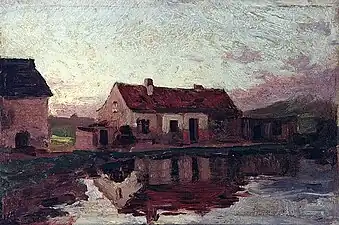 Franzensbad, 1873
Radishchev Art Museum
- Monaco
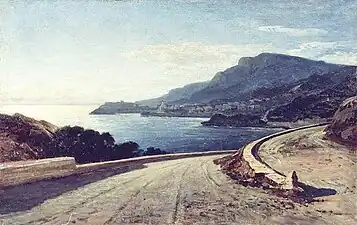
- Switzerland
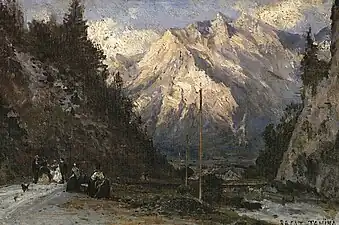 On the Tamina River, 1865
Radishchev Art Museum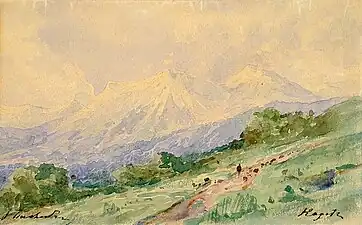 Bad Ragaz
Radishchev Art Museum
- Germany
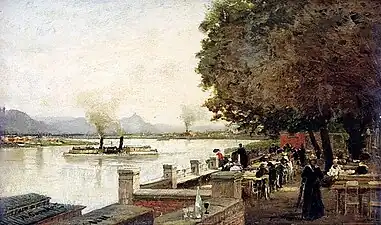
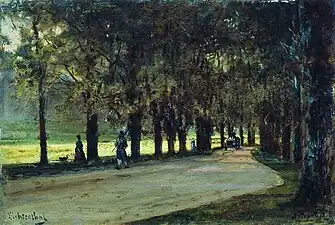 An alley in the park. Liechtenstein. 1889.
- Bulgaria
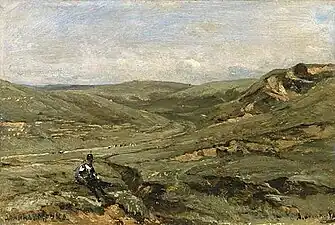 Valley in Bulgaria (1881)
Radishchev Art Museum
- Unknown site
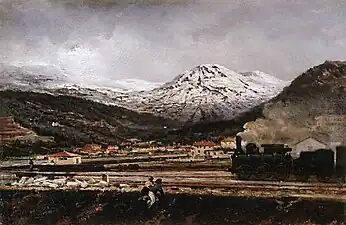 A Mountain Landscape, 1865
Radishchev Art Museum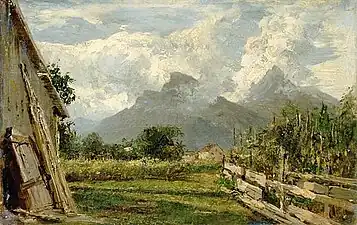 After the Rain (1865)
Radishchev Art Museum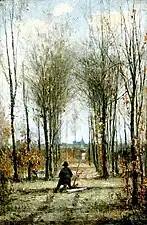 Autumn, 1879
Radishchev Art Museum
- Portraiture
 Afanasy Radishchev portrait of 1855
Radishchev Art Museum
Footnotes

- "The Peredvizhniki appreciated Bogolyubov's professionalism and the realistic principles of his work, but disagreed with him in defining priorities in art. Nevertheless, the "neutral" character of landscape allowed such truthful observers of nature as Bogolyubov to coexist in the association."[1]
- Ilyina, I.A.; Devyataykina, N.I. (2019). "A.P. Bogolyubov and Association of travelling art exhibitions: features of interactions and their importance for development of the Russian landscape painting school". Культурная жизнь Юга России. Теория и история искусства. 1 (72). Saratov: 16.
- Alexey Bogolyubov (in Russian) article
- Bogolyubov page on the site of Saratov Radischev Museum (in Russian)
- Posokhina, Marina V. (2023). "A. Bogolyubov and I. Aivazovsky. An issue of creative and personal relationships". RSUH Bulletin. "Philosophy. Sociology. Art Studies" (2). Saint Petersburg: 131–132. doi:10.28995/2073-6401-2023-2-127-140.
References
- Bogoliubov. by M. I. Andronnikova. Moscow. 1962
External links
- Alexey Bogolyubov Notes of an Sailor-Artist Archived 2007-02-03 at the Wayback Machine (in Russian)